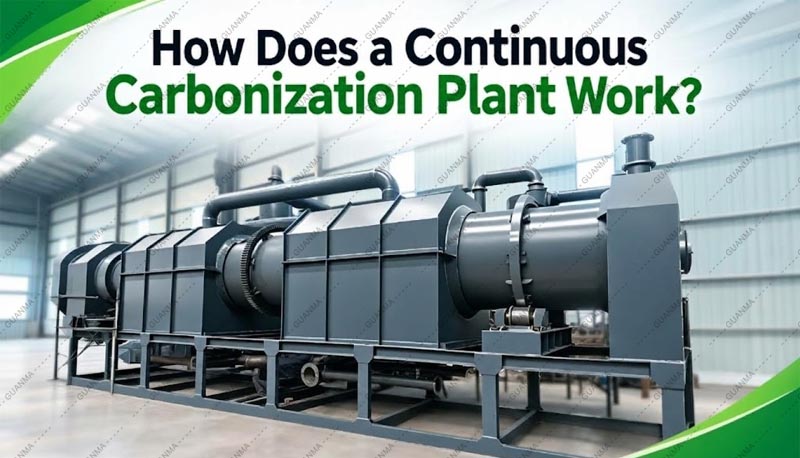
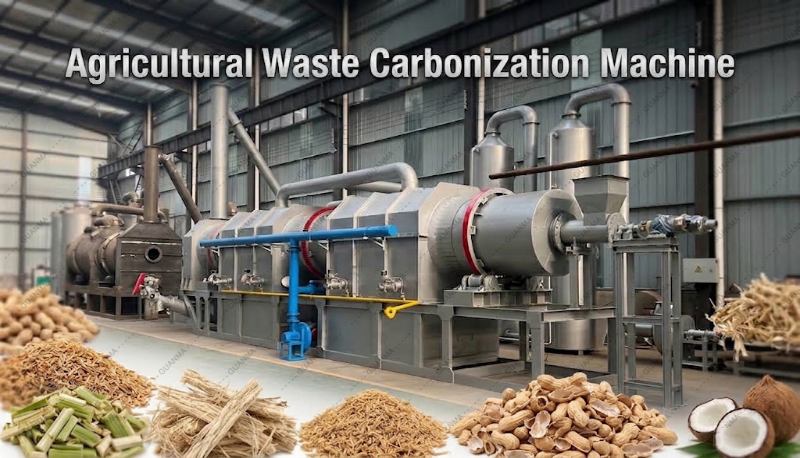
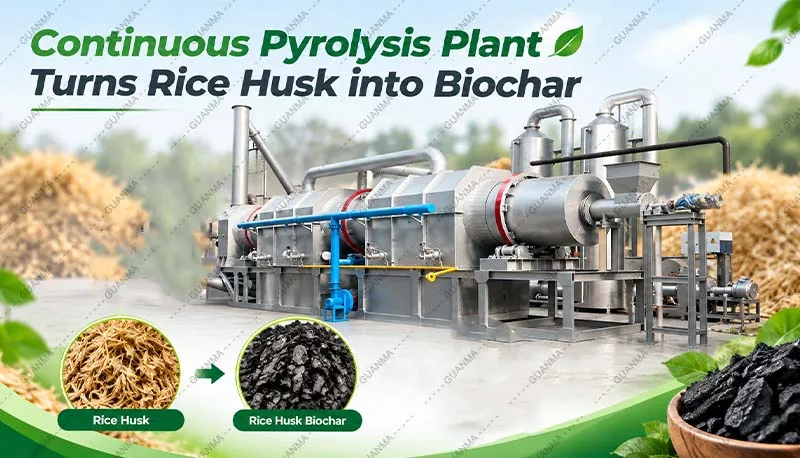
Fully automatic continuous biomass pyrolysis plant feeds raw biomass and discharges high-carbon biochar simultaneously, turning waste streams like sawdust, rice husk, coconut shell, and wood chips into steady revenue.
What Is a Continuous Biomass Pyrolysis Plant?
A continuous biomass pyrolysis plant is an industrial-scale thermochemical conversion system that thermally decomposes biomass in an oxygen-starved environment 24 hours a day, 7 days a week. Raw material enters one side, biochar exits the other, while syngas and wood vinegar are recovered simultaneously.
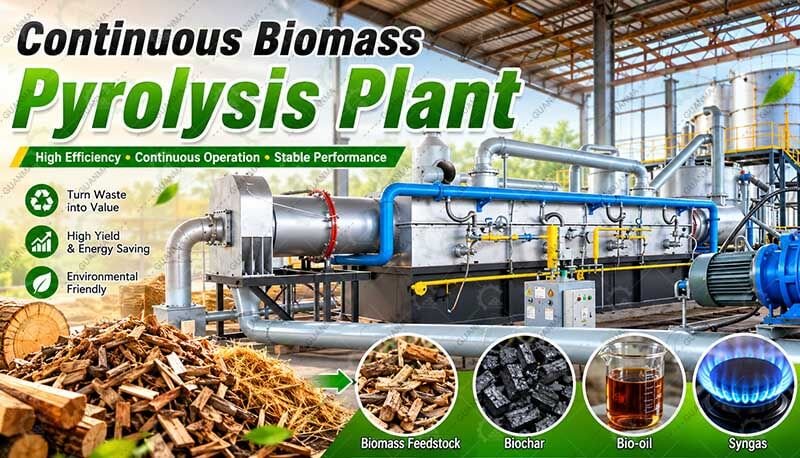
This non-stop design makes it the preferred choice for businesses aiming to build a 24/7 biochar production line or integrate biochar manufacturing into an existing pellet mill, rice mill, or forestry operation.
How Continuous Biomass Pyrolysis Technology Works
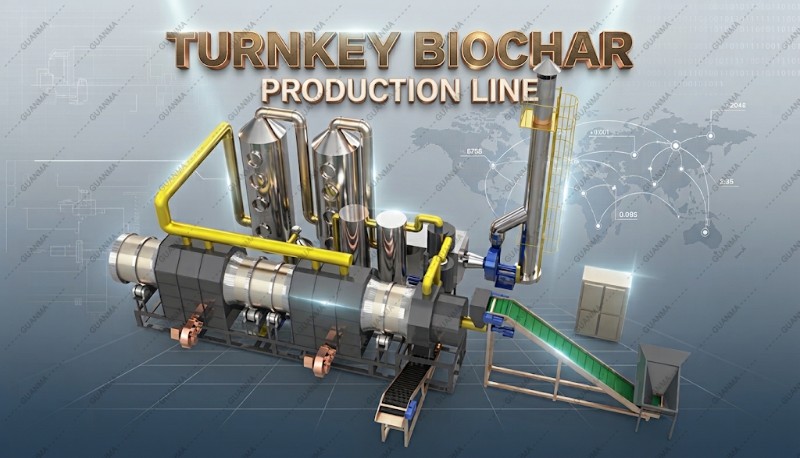
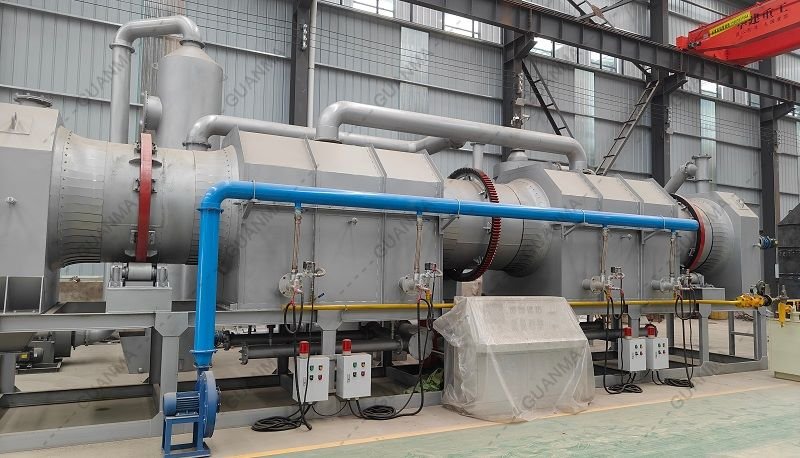
The core of the continuous biomass pyrolysis plant lies in its sealed, horizontal reactor and automated material handling. Here’s the step-by-step flow:
Pretreatment & Feeding
Biomass (moisture ≤15%, size ≤30 mm) is shredded and delivered into a buffer silo. A variable-speed screw conveyor pushes the material into the pyrolysis reactor at a precisely controlled rate.
Indirect Heating & Pyrolysis
The reactor is heated externally by a hot-blast furnace or by combusting a portion of the self-generated syngas. Inside, biomass moves forward under temperatures of 400–600°C, decomposing into biochar, volatile gases, and tar mist.
Continuous Slag Discharge
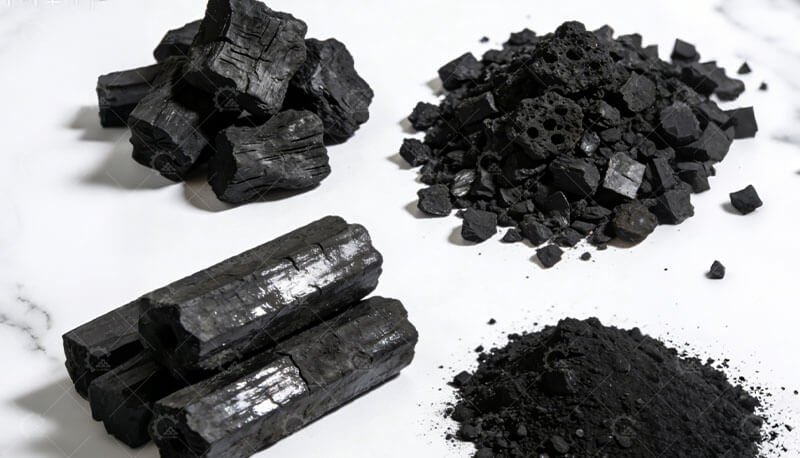
The solid product (biochar) reaches the end of the reactor and is discharged through a water-cooled, three-stage screw system. This keeps oxygen out and cools the char to a safe handling temperature.
Gas & Liquid Recovery
Hot volatiles pass through a cyclone dust remover, then enter a multi-stage condenser train. Wood vinegar and tar are collected, and the remaining non-condensable syngas is purified and recycled to fuel the reactor, dramatically cutting auxiliary energy costs.
Emission Control
Exhaust gas passes through a spray tower and activated carbon adsorption, ensuring compliance with strict emission standards without visible smoke.
This continuous pyrolysis reactor design delivers stable residence time and temperature zoning, yielding biochar with fixed carbon content consistently above 75–85%, batch after batch.

5 Advantages of a Continuous Pyrolysis System Over Batch
Non-Stop Productivity
True 24-hour operation with no cooling downtime. A 1–2 ton/hour continuous carbonization machine can process 24–48 tons daily, compared to 3–4 batches for a traditional kiln of similar footprint.
Minimal Labor
PLC intelligent control and automated feeding/discharge slash the workforce requirement to just 1–2 operators per shift.
Energy Self-Sufficiency
Syngas reuse covers up to 70–90% of the heat demand, making the running cost remarkably low.
Stable, High-Purity Biochar
Precisely controlled residence time and temperature yield uniform biochar with high specific surface area, sought after for soil amendment and industrial carbon.
Wide Feedstock Flexibility
From wood chips, bamboo, and straw to palm kernel shell, bagasse, and olive pomace, one continuous pyrolysis system handles multiple biomass types without retooling.
Key Applications and High-Value End Products
High-Carbon Biochar
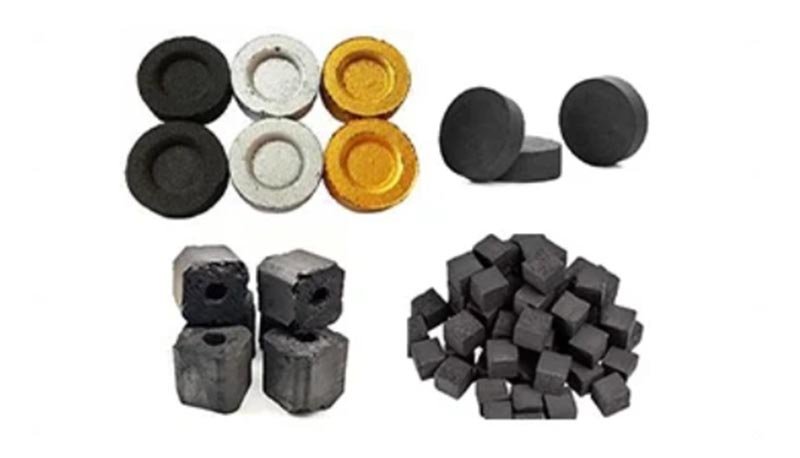
Used as soil conditioner, carbon sequestration agent, BBQ charcoal, hookah charcoal raw material, and metallurgical reductant.
Wood Vinegar
A natural plant growth promoter, pest repellent, and deodorizer. After purification, it is extensively used in organic farming and livestock.
Tar & Syngas
Tar can be refined into fuel oil or sold to chemical factories. Syngas runs the plant itself and can also feed a generator for electricity production.
Industrial continuous biomass pyrolysis equipment typically achieves a payback period of 12–18 months.
What to Look for When Choosing a Continuous Biomass Pyrolysis Plant
Reactor Material
Boiler-grade Q245R/Q345R steel with high-temperature resistance, often supplemented with a stainless steel inner layer to prevent corrosion from acidic volatiles.
Sealed Feeding & Discharging
A multi-stage, nitrogen-purged screw system ensures zero oxygen ingress, preventing combustion and ensuring safety.
Condensation Efficiency
Tube-and-shell condensers with segmented temperature control maximize wood vinegar recovery while keeping syngas clean.
PLC Interface
Touchscreen control with real-time monitoring of temperature, pressure, motor speed, and gas flow. Remote IoT monitoring is becoming standard.
Modular Scalability
Look for designs that allow capacity expansion from 0.5 t/h to 3 t/h or more without redesigning the whole layout.
Get Your Continuous Biomass Pyrolysis Plant Quotation Today
Transitioning to a continuous biomass pyrolysis plant rewrites your cost. Contact guanma machinery now, Let’s build your high efficiency biomass pyrolysis plant and put your biomass waste to work – continuously.
📩 Get Your Free Quote Today
Contact us today to discuss your project, capacity requirements, and target materials. Our team will reply within 24 hours with a customized proposal. You can also reach us directly at guanmarecycle@gmail.com — we are here to help!