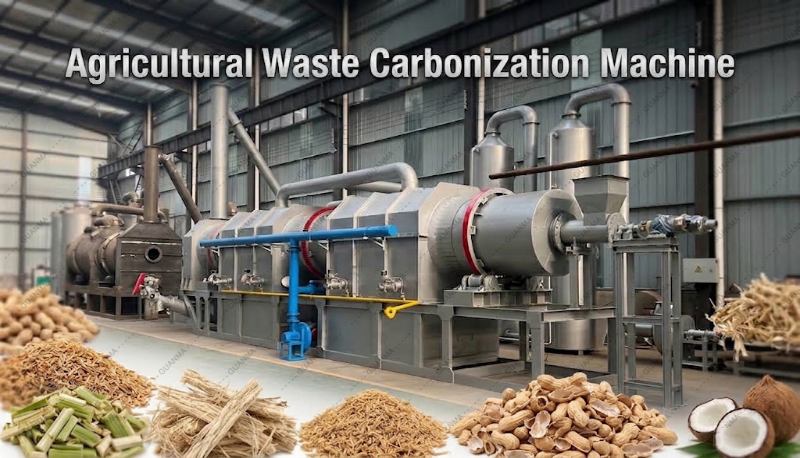
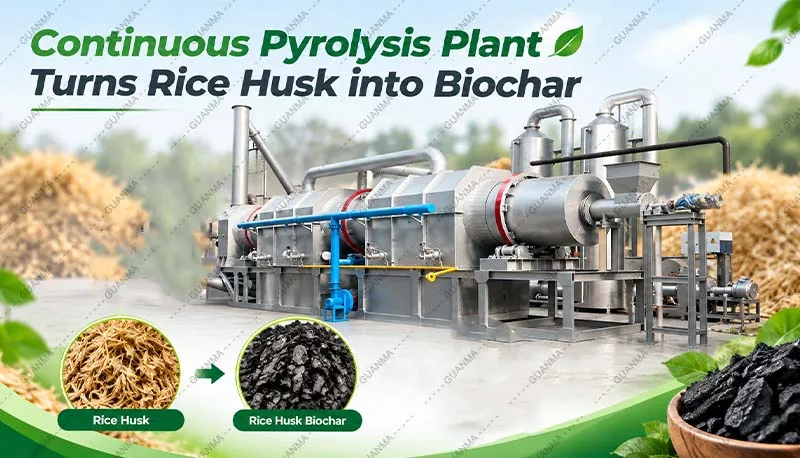
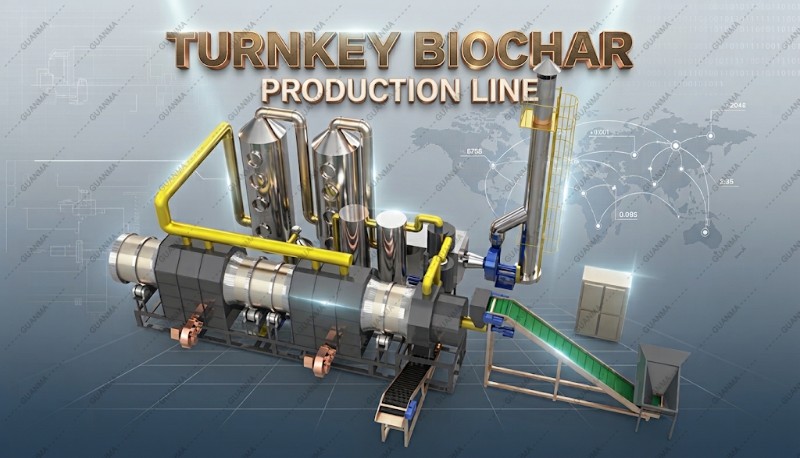
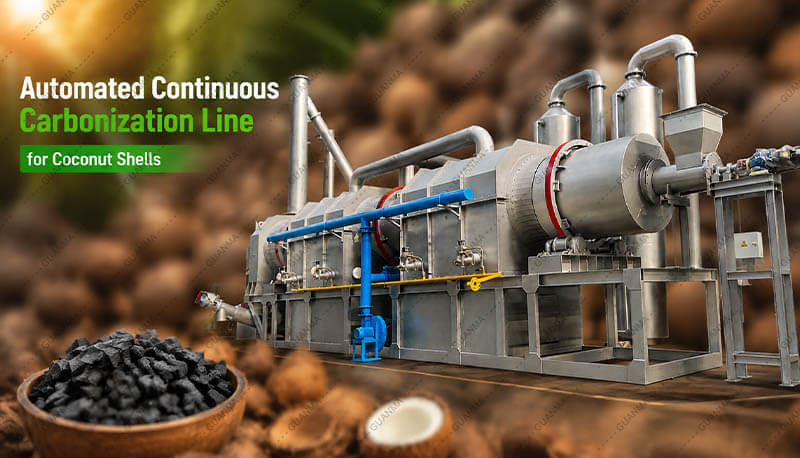
If you are looking to transform large volumes of coconut shells into market-ready charcoal, an automated continuous carbonization line for coconut shells is the industrial solution you need.
How a Continuous Coconut Shell Carbonization Plant Maximizes Productivity
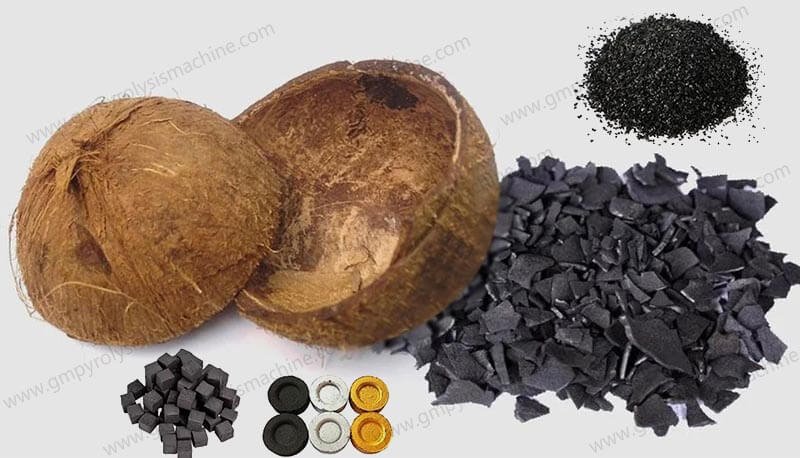
A modern coconut shell carbonization plant built around a continuous carbonization furnace eliminates idle time between batches. Raw material enters one end, and finished charcoal exits the other – all while the system recovers combustible gas to fuel its own operation.
Key Advantages of an Automated Continuous Carbonization Line
1. 24/7 Non-Stop Operation
Once the system reaches working temperature, the automated continuous carbonization line can run around the clock.
2. High Charcoal Yield and Uniform Quality
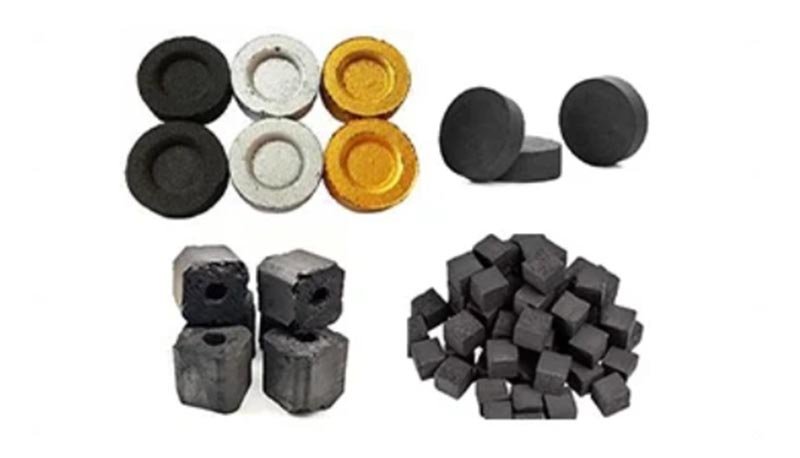
The result is charcoal with fixed carbon content above 80%, low volatile matter, and a uniform structure – ideal for shisha charcoal, BBQ briquettes, and activated carbon feedstock.
3. Energy-Saving Design with Syngas Recycling
The combustible syngas generated during carbonization is purified and fed back into the burner or a connected boiler. This drastically reduces external fuel consumption, making the coconut charcoal making machine line remarkably cost-efficient once in operation.
4. Eco-Friendly Emission Control
Cyclone de-dusting, spray tower, and condensation – strips tar, dust, and acid mist from the flue gas. The final emission meets EU and local environmental standards, so your coconut shell to charcoal plant stays compliant wherever you operate.
5. Labor-Saving and Safe Automation
With a PLC intelligent control panel, the entire line can be monitored by one or two operators. Real-time temperature, pressure, and oxygen-level sensors reduce the risk of overheating or backfire, while automatic alarms protect both workers and machinery.
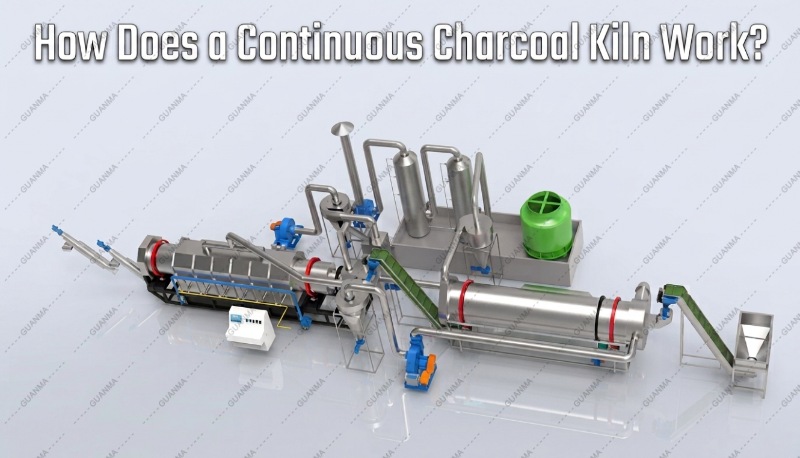
Step-by-Step: How the Continuous Carbonization Process Works
1. Raw Material Preparation and Feeding
Coconut shells are crushed to 10–30 mm granules and dried to below 15% moisture. A belt conveyor or screw feeder then moves the prepared shells into the sealed continuous carbonization furnace at a steady, adjustable rate.
2. Drying and Preheating Phase
Inside the first section of the furnace, waste heat from the carbonization zone evaporates residual moisture and preheats the shells. This staged heating prevents thermal shock and cracks, preserving the charcoal’s mechanical strength.
3. Continuous Carbonization Furnace
The heart of the automated continuous carbonization line is the rotary drum or multi-hearth reactor. Temperatures climb to 400–600 °C in an oxygen-starved environment. Volatiles are released as syngas, while the solid residue transforms into high-grade coconut charcoal.
4. Charcoal Discharge and Cooling
Carbonized material exits through a water-cooled screw conveyor or indirect water-jacket cooler, dropping the temperature below 30 °C before collection. The cool discharge prevents spontaneous combustion and keeps the charcoal easy to package.
5. Combustible Gas Treatment and Dust Removal
Syngas passes through a cyclone separator to drop out carbon dust, then through a spray tower and condenser to remove tar and moisture. Cleaned gas is routed to the burner, while recovered wood vinegar and tar can be collected as valuable by-products.
Wide Applications of Coconut Shell Charcoal
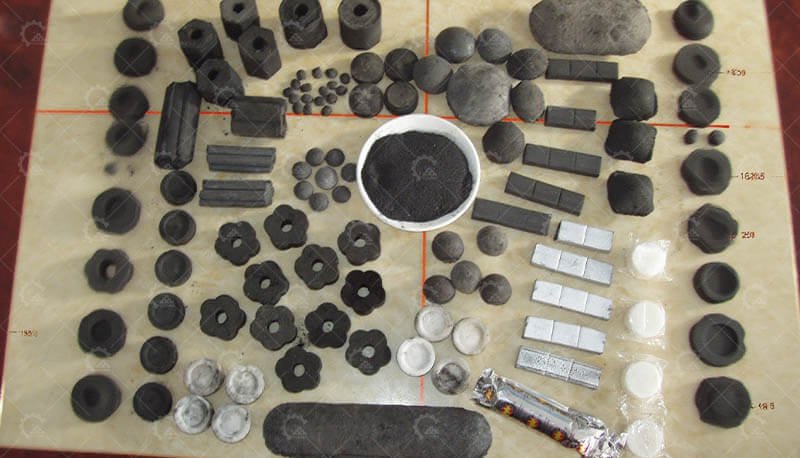
Shisha/Hookah Charcoal: Consistent density and high heat make it the preferred base for premium hookah coals.
BBQ Briquettes: Coconut charcoal grills evenly and imparts no chemical taste.
Activated Carbon: The microporous structure is ideal for water filters, air purification, and gold recovery.
Soil Amendment (Biochar): Crushed coconut biochar improves water retention and microbial activity in tropical soils.
Ready to Scale Your Coconut Shell Charcoal Business?
Contact guanma machinery today for a automated continuous carbonization line free project analysis and a detailed quotation.
📩 Get Your Free Quote Today
Contact us today to discuss your project, capacity requirements, and target materials. Our team will reply within 24 hours with a customized proposal. You can also reach us directly at guanmarecycle@gmail.com — we are here to help!