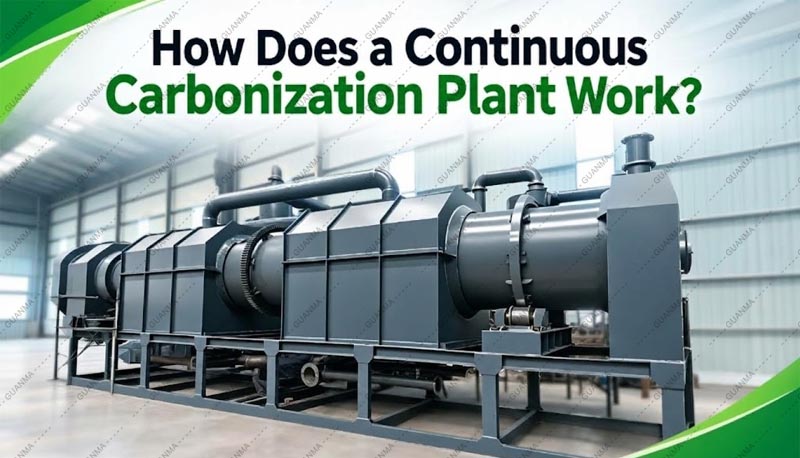
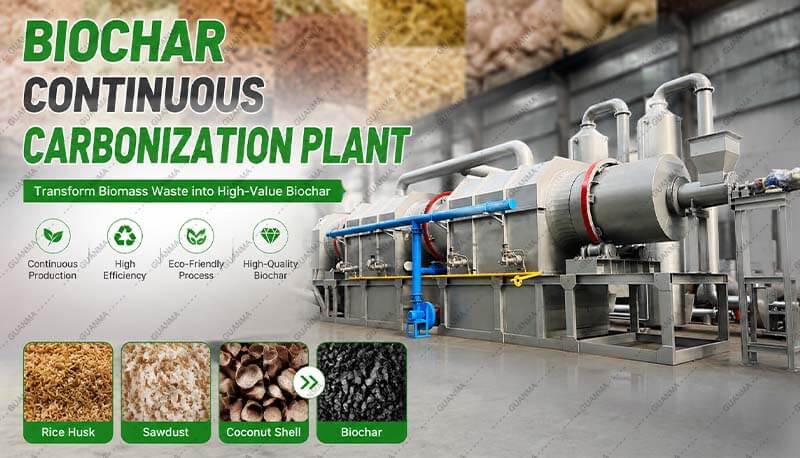
A continuous carbonization pyrolysis system for biochar project is an industrial biomass conversion line that transforms agricultural, forestry, and organic waste into high-carbon biochar, syngas, and wood vinegar through a continuous, oxygen-limited thermal process.
What Is a Continuous Carbonization Pyrolysis System for Biochar?
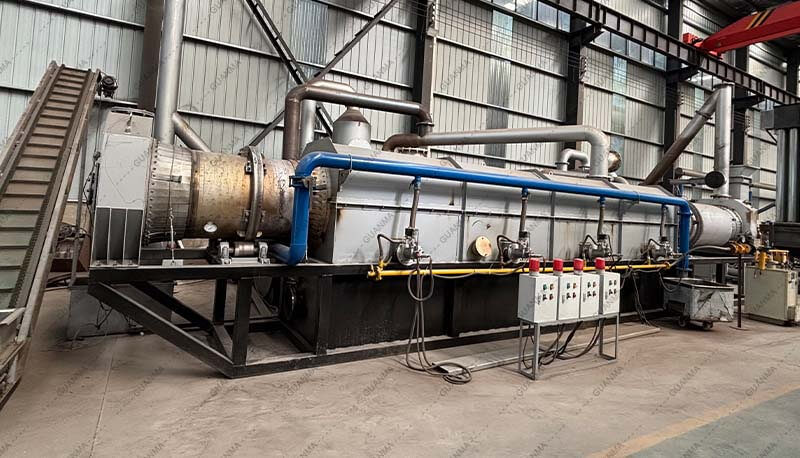
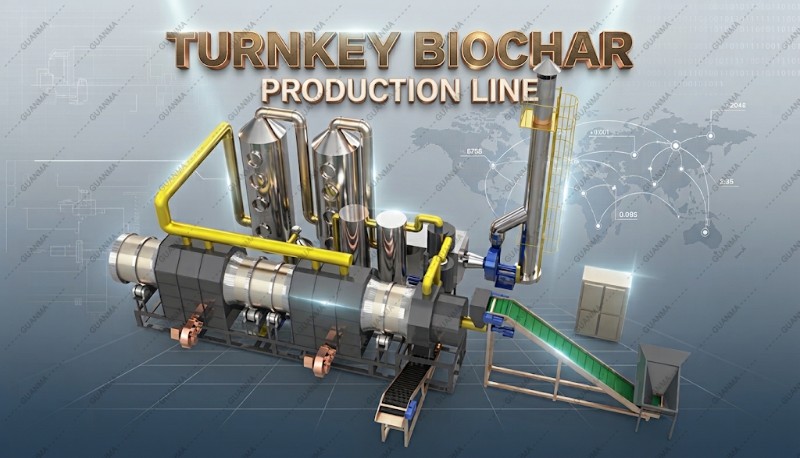
A continuous carbonization pyrolysis system is a biochar production plant designed to feed biomass waste, heat it to pyrolysis temperature, recover combustible gas, and discharge biochar without stopping the production line. It usually consists of the following core units:
- Automatic feeding system
- Pre-drying unit
- Continuous pyrolysis reactor
- Gas purification and condensation system
- Biochar cooling and discharge system
- PLC control cabinet
This type of system is often called a continuous biochar pyrolysis reactor, biomass carbonization machine, or continuous carbonization furnace. It is suitable for commercial biochar projects that need stable daily output and consistent product quality.
How a Continuous Biochar Pyrolysis Reactor Works
The working principle of a continuous carbonization pyrolysis system for biochar is based on heating biomass in a low-oxygen environment to 350–700 °C. At these temperatures, organic compounds decompose into solid biochar, condensable liquids, and non-condensable syngas.
Step 1: Feeding and Pre-Drying
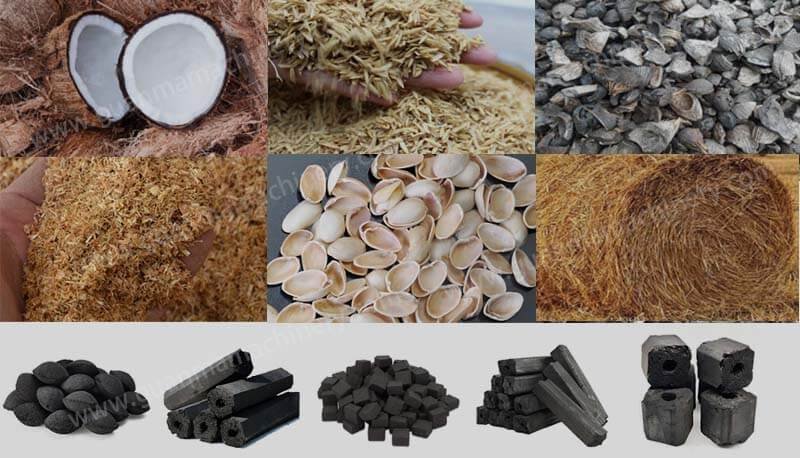
Biomass waste such as wood chips, rice husk, coconut shell, or straw is shredded to a suitable size, usually below 30 mm. The material is then dried to reduce moisture content to about 15–20%. Lower moisture improves carbon yield and reduces energy consumption.
Step 2: Continuous Pyrolysis and Carbonization
The dried biomass enters the continuous pyrolysis reactor through a screw feeder. Inside the reactor, temperature is maintained between 400 °C and 650 °C depending on the target biochar quality. The oxygen-limited atmosphere prevents complete combustion and forces the biomass to carbonize.
Step 3: Syngas Recovery and Condensation
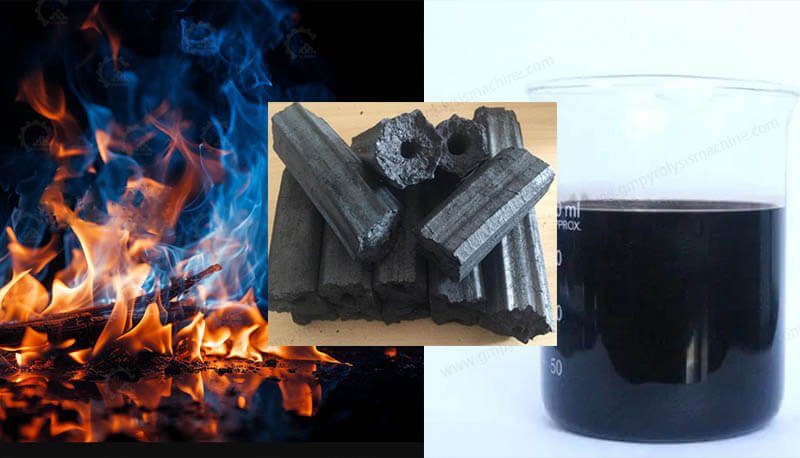
Volatile gases released during pyrolysis pass through a gas treatment system. Condensable components become wood vinegar and tar, while non-condensable syngas is cleaned and recycled to heat the reactor or dryer. This is one of the advantages of a continuous carbonization furnace: it can use its own syngas to reduce external fuel consumption.
Step 4: Biochar Cooling and Discharge
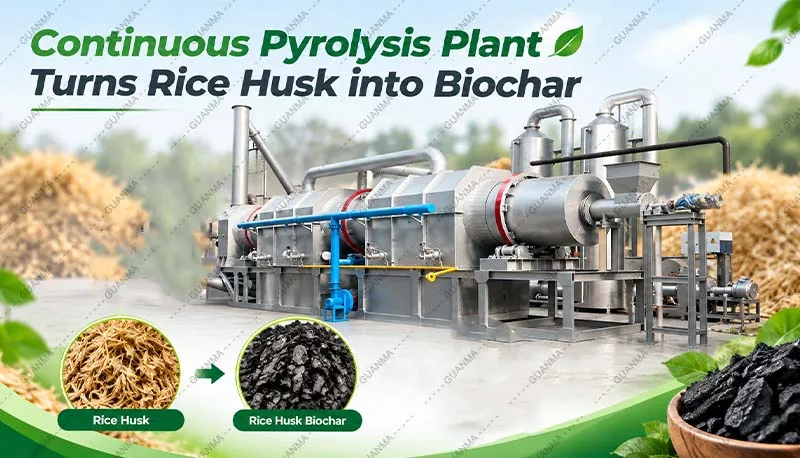
The hot biochar is cooled through a water-cooled screw conveyor or rotary cooler. It is then discharged continuously, ready for packaging, further grinding, or direct sale. The final biochar typically has a fixed carbon content of 75–90%, depending on feedstock and process settings.
Feedstocks for a Biomass Carbonization Machine
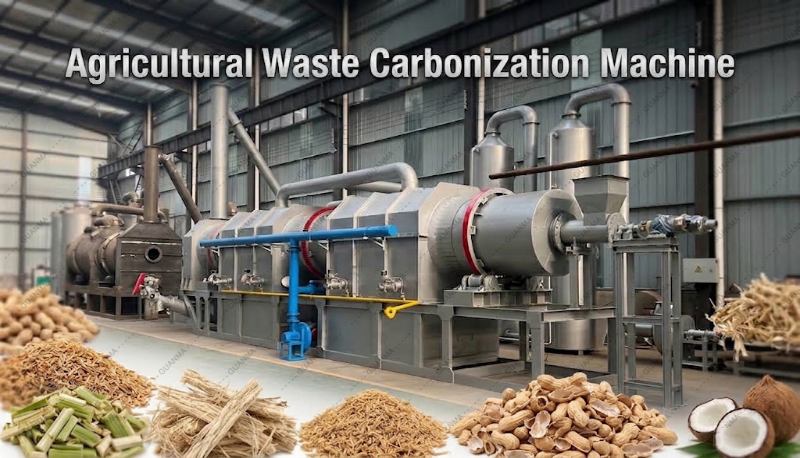
A continuous carbonization pyrolysis system can process a wide range of organic materials. Common feedstocks include:
- Wood chips and sawdust
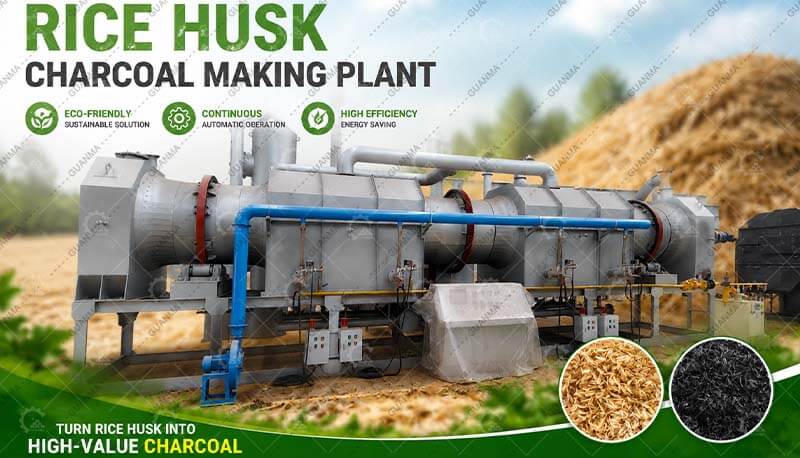
- Rice husk
- Coconut shell
- Palm kernel shell
- Bamboo waste
- Wheat straw and corn stalks
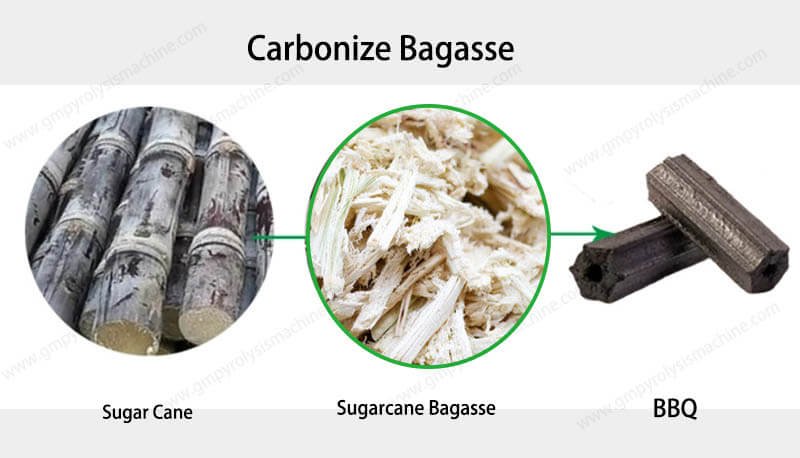
- Bagasse
- Olive pomace
- Nut shells
- Sewage sludge after pre-treatment
- Organic fraction of municipal solid waste after sorting
For best results, the feedstock should be:
Moisture content: below 20%
Particle size: below 30 mm, or below 50 mm with pre-shredding
Free of metals, stones, and other non-organic contaminants
Using a flexible biomass carbonization machine allows you to switch between feedstocks seasonally. For example, many biochar producers process rice husk in autumn and coconut shell in spring, maintaining year-round operation.
Advantages of a Continuous Carbonization Furnace for Biochar Production
1. Stable Biochar Quality and Higher Market Price
Because temperature, feeding speed, and residence time are controlled automatically, a continuous system produces biochar with consistent carbon content, pH, and particle structure.
2. Lower Fuel and Operating Costs
The syngas generated during pyrolysis is usually enough to sustain the process after startup. This can reduce external fuel consumption by 60–80%. Automated feeding and discharging also reduce labor costs.
3. Environmental Compliance
A well-designed continuous pyrolysis system includes flue gas treatment equipment such as cyclones, spray towers, electrostatic precipitators, and activated carbon filters. This helps meet local emission standards and improves the environmental profile of your biochar project.
4. 24/7 Operation and Scalability
Continuous systems are built for round-the-clock operation. If your feedstock supply grows, you can add a larger reactor or install multiple parallel lines. This modular approach makes it easier to scale a biochar production plant from pilot to commercial scale.
5. Feedstock Diversity
The continuous carbonization pyrolysis machine can process a wide range of raw materials, such as rice husks, coconut shells, palm kernel shells, wood, poultry manure, chicken manure, banana peels, vegetable residues, aluminum cans, and municipal sludge.
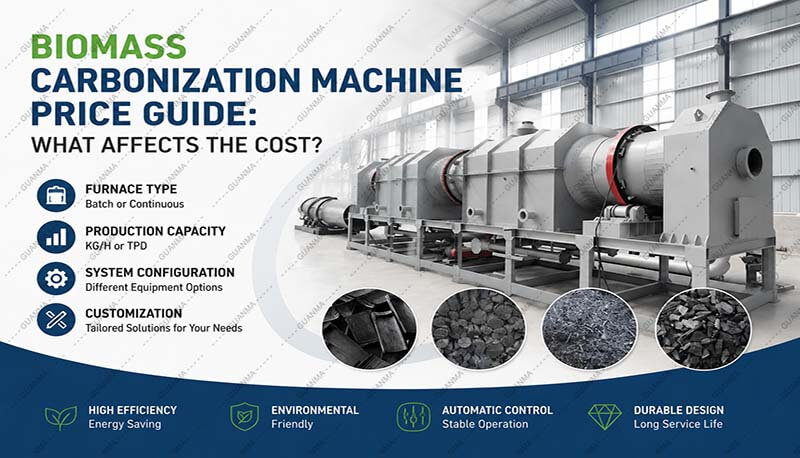
What Affects the Price of a Continuous Pyrolysis System?
The cost of a continuous biomass pyrolysis system depends on:
- Processing capacity
- Automation level
- Reactor material and thickness
- Emission control equipment
A small pilot-scale system may start at a lower investment, while a fully automated commercial biochar production plant requires a higher budget but offers better ROI through higher output and lower labor costs.
Main Revenue Streams
A continuous carbonization pyrolysis system can produce multiple sellable products:
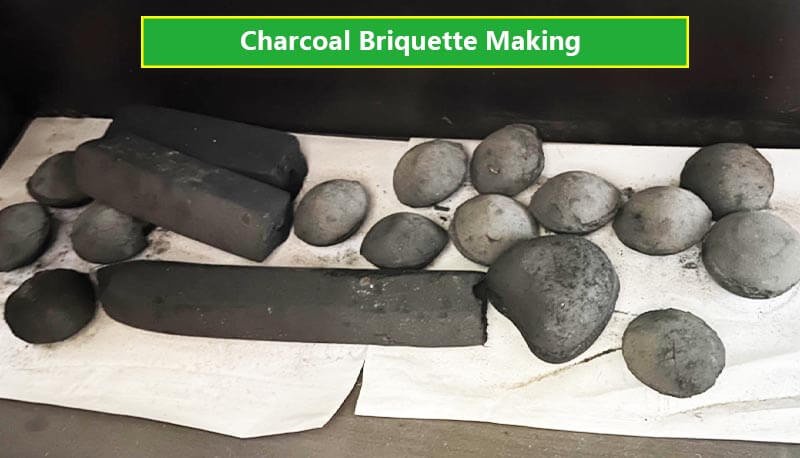
Biochar: Used as soil amendment, carbon sequestration material, animal feed additive, or industrial carbon.
Wood vinegar: Sold as organic pesticide, plant growth promoter, or raw material for cosmetics and agricultural products.
Syngas: Recycled for heating or used to generate electricity.
Carbon credits: Biochar projects can qualify for carbon removal certificates under programs such as Puro.earth or Verra.
How to Select a Continuous Biomass Pyrolysis System
1. Match Feedstock and Output Requirements
Start with a clear mass balance. How many tons of feedstock can you collect per day? What biochar output do you need? This determines the capacity of the continuous carbonization furnace and the size of the drying system.
2. Verify Process Performance with Your Material
Always test your actual feedstock before purchase. Biomass materials behave differently. A reliable manufacturer should offer trial runs or provide video and data from similar materials. Ask for:
Biochar yield
Fixed carbon content
Wood vinegar output
Energy consumption per ton
3. Compare Energy Consumption and Automation Level
A good system should use its own syngas after startup. Check the PLC control system, HMI interface, and remote monitoring capabilities. Higher automation reduces labor errors and improves safety.
4. Check Installation, Training, and After-Sales Support
For overseas buyers, after-sales support is critical. Look for suppliers that offer:
Installation guidance or on-site commissioning
Operator training
Spare parts list
One-year or longer warranty
Responsive technical support
A biochar making machine for sale is not just a single machine. It is a complete biomass carbonization production line that requires proper installation and service.
Ready to Start Your Biochar Project?
If you are evaluating a continuous carbonization pyrolysis system for your biochar project, please contact Guanma Machinery to request a customized proposal.
FAQ: Continuous Carbonization Pyrolysis System for Biochar Projects
1. Can the system handle different feedstocks?
Yes. Most continuous pyrolysis equipment is designed to process multiple biomass types. However, you may need to adjust temperature, residence time, and feeding speed when switching feedstocks. Pre-treatment such as shredding and drying is still required.
2. Is a continuous pyrolysis system environmentally friendly?
A properly designed system with integrated gas treatment can meet industrial emission standards. It also reduces waste volume and locks carbon into biochar, supporting carbon sequestration goals.
3. Can the system handle poultry manure and chicken litter at 10–15% moisture?
Yes. At 10–15% moisture, poultry manure and chicken litter can be fed directly into the continuous carbonization reactor after basic crushing and screening. A separate dryer is optional.
4. Can the carbonization gas be recovered for heat and power?
Yes. The syngas can be burned for process heat in the dryer and reactor. If gas volume is sufficient, it can be used in a gas engine generator for electricity generation.
5. Do you provide complete plant or only the carbonization furnace?
We supply complete plants including feedstock preparation, drying, carbonization, gas treatment, emission control, cooling, storage, electrical control and biochar handling.
📩 Get Your Free Quote Today
Contact us today to discuss your project, capacity requirements, and target materials. Our team will reply within 24 hours with a customized proposal. You can also reach us directly at guanmarecycle@gmail.com — we are here to help!