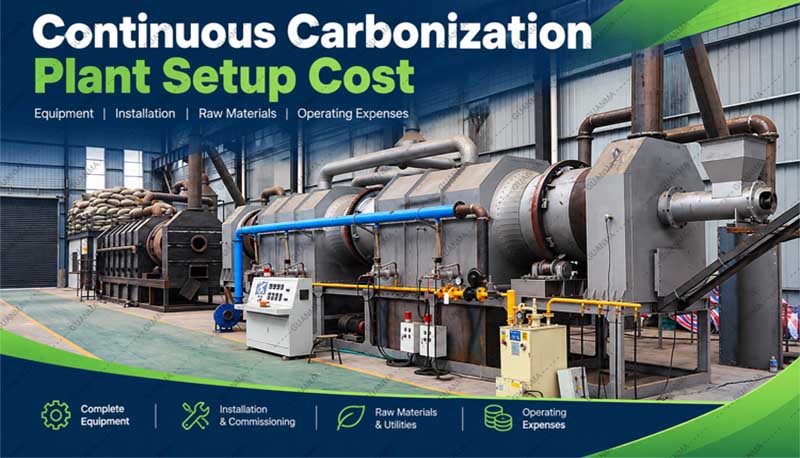
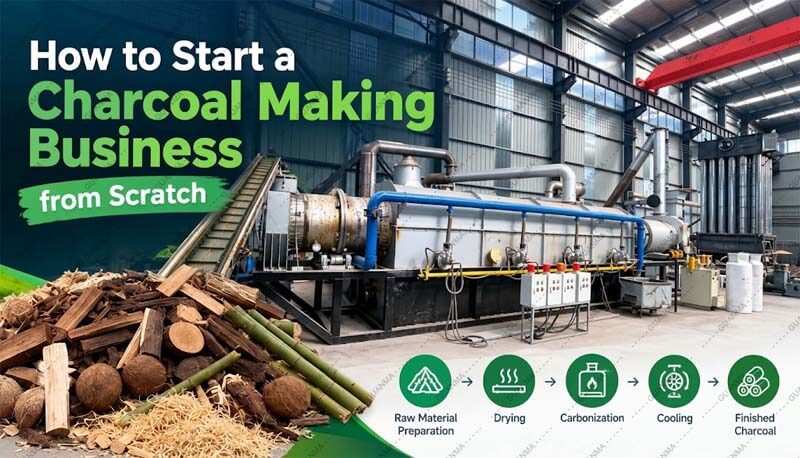
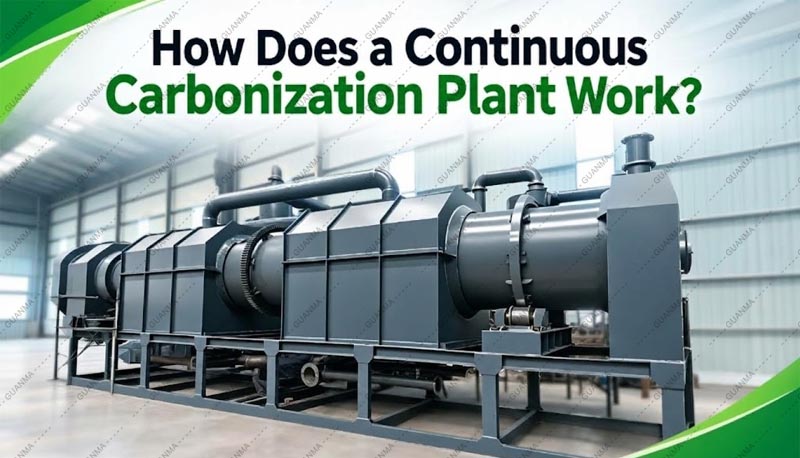
How does a continuous charcoal kiln work? A continuous charcoal kiln uses controlled heating in a low-oxygen environment to convert biomass into charcoal. Unlike traditional batch kilns, it continuously feeds biomass, carbonizes the material, cools the charcoal, and discharges the finished product.
What Is a Continuous Charcoal Kiln?
A continuous charcoal kiln is industrial equipment used to convert biomass into charcoal through thermal carbonization. It is also commonly known as a continuous carbonization furnace.
How Does a Continuous Charcoal Kiln Work?
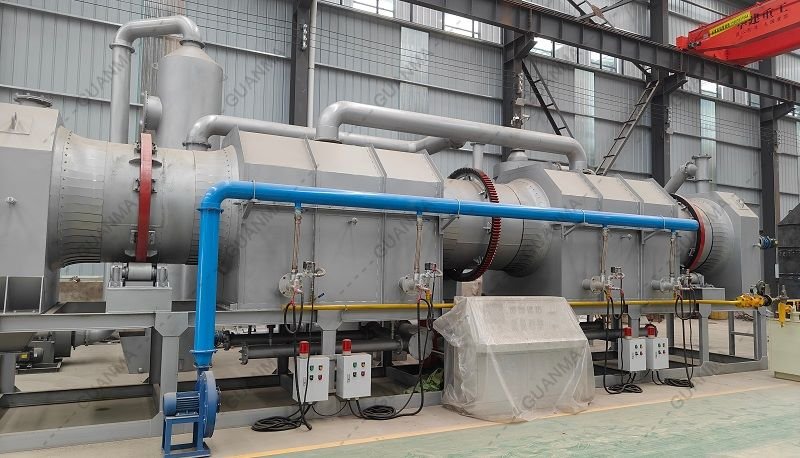
The working principle of a continuous carbonization kiln can be divided into five main stages.
1. Biomass Preparation
Depending on the material, preparation may include crushing and drying. Proper particle size and moisture content help improve feeding stability, heat transfer, and carbonization efficiency.
2. Feeding
Prepared biomass is transported into the continuous carbonization kiln through a feeding system.
3. Controlled Carbonization
Inside the continuous charcoal making machine, biomass is heated under limited-oxygen conditions.
As the temperature increases, moisture and volatile components are released from the biomass. The organic structure gradually decomposes and forms a carbon-rich solid product.
4. Combustible Gas Recycling
A properly designed continuous charcoal kiln reuses combustible gases generated during carbonization. This reduces the need for continuous external fuel input and can improve the overall energy efficiency of the system.
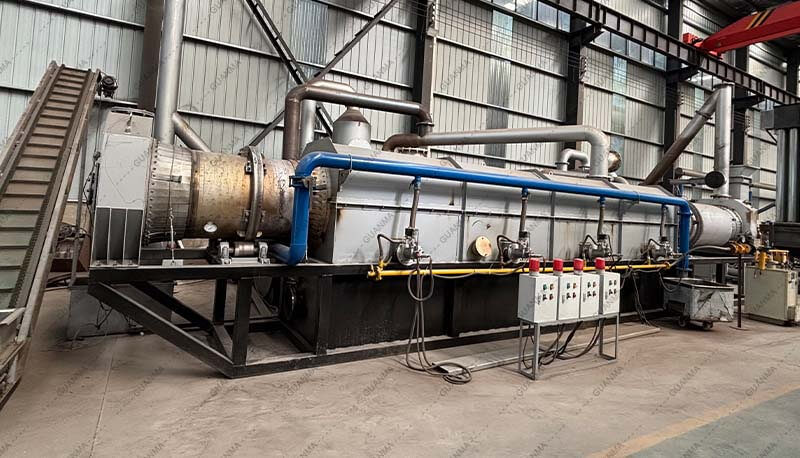
5. Charcoal Cooling and Discharge
After carbonization, the hot charcoal enters a controlled cooling section. Cooling the charcoal before significant contact with air helps reduce oxidation and combustion risks.
Once the temperature is reduced to a suitable level, the charcoal can be continuously discharged for storage or further processing, such as crushing, screening, or briquette production.
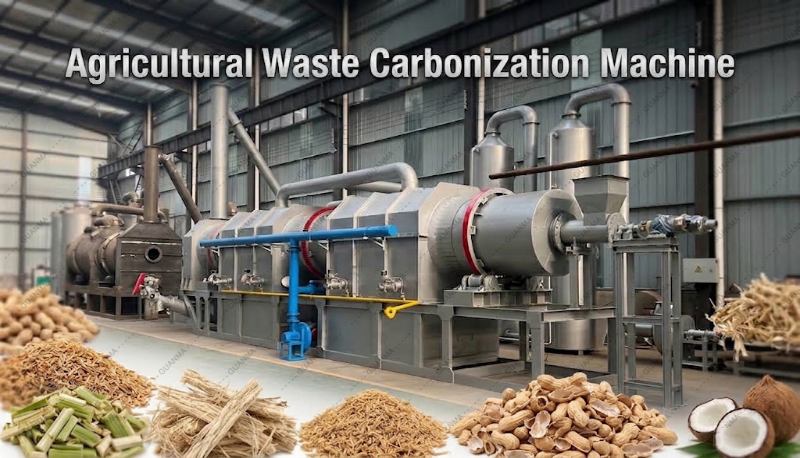
What Materials Can a Continuous Charcoal Kiln Process?
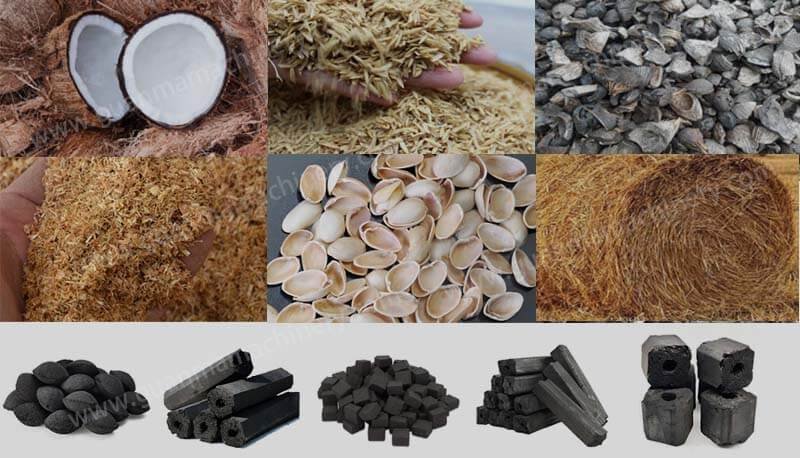
Common applications include:
- Coconut shells: Suitable for producing high-quality shell charcoal.
- Wood chips and sawdust: Common feedstocks for industrial charcoal production.
- Palm shells: A widely available biomass resource in many tropical regions.
- Bamboo: Can be carbonized for charcoal and other carbon-based products.
- Agricultural residues: Certain agricultural wastes can also be processed after suitable preparation.
Benefits of a Continuous Charcoal Kiln
A continuous charcoal kiln offers several advantages for commercial biomass carbonization.
- Continuous Production: Operators can continuously feed biomass while the system continuously discharges cooled charcoal, reducing downtime between production cycles.
- Better Process Control: Operators can control the feeding rate, heating conditions, and residence time more consistently than with many traditional batch systems.
- Gas Recycling: The system recycles combustible gases generated during carbonization as process fuel, reducing the need for external energy.
- Flexible Biomass Applications: The equipment can be configured for different biomass materials and production capacities.
- Suitable for Industrial Production: Operators can configure the equipment to process different biomass materials and meet various production capacities.
Continuous vs. Batch Charcoal Kiln
The main difference is the production method.
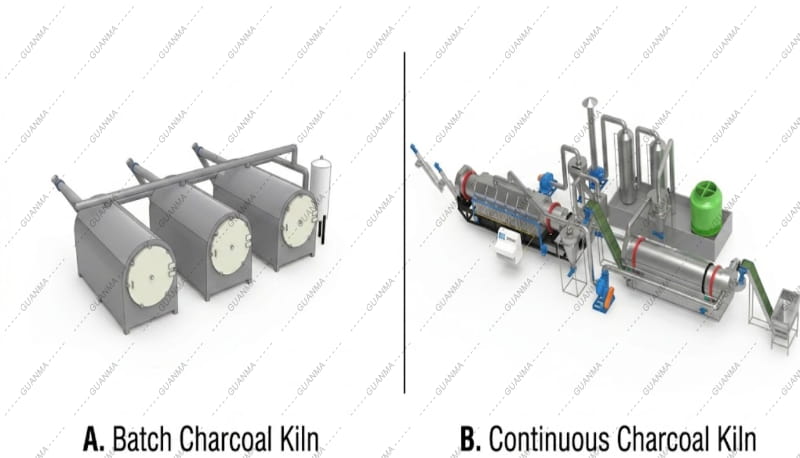
A batch charcoal kiln processes a fixed amount of biomass during each cycle. The kiln normally needs to be loaded, carbonized, cooled, and unloaded before the next batch begins.
A continuous charcoal kiln integrates feeding, carbonization, cooling, and discharge into an ongoing process.
For small-scale production, a batch kiln may be sufficient. For projects requiring higher output and longer operating hours, continuous carbonization can offer greater production efficiency.
How to Choose a Continuous Charcoal Kiln?
When selecting a continuous charcoal kiln for sale, production capacity is only one factor to consider.
You should also evaluate:
- Raw material type
- Moisture content
- Particle size
- Gas recycling system
- Exhaust gas treatment
- Automation level and more
An experienced continuous charcoal kiln manufacturer can use this information to design a suitable carbonization system instead of simply recommending a standard machine.
Share your raw material, target capacity, and intended charcoal application with us. Our engineering team will design a customized continuous carbonization solution for your needs.
📩 Get Your Free Quote Today
Contact us today to discuss your project, capacity requirements, and target materials. Our team will reply within 24 hours with a customized proposal. You can also reach us directly at guanmarecycle@gmail.com — we are here to help!