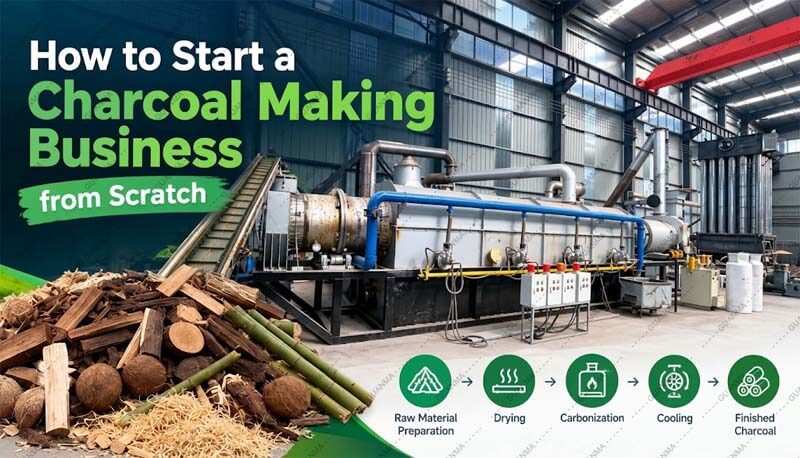
If you are planning a large-scale charcoal or biochar production business, a continuous carbonization plant can provide stable production, lower labor requirements, and efficient energy utilization. But how much does a continuous carbonization furnace cost? The final price depends on processing capacity, raw material, moisture content, automation level, heating system, and environmental equipment.
What Is a Continuous Carbonization Furnace?
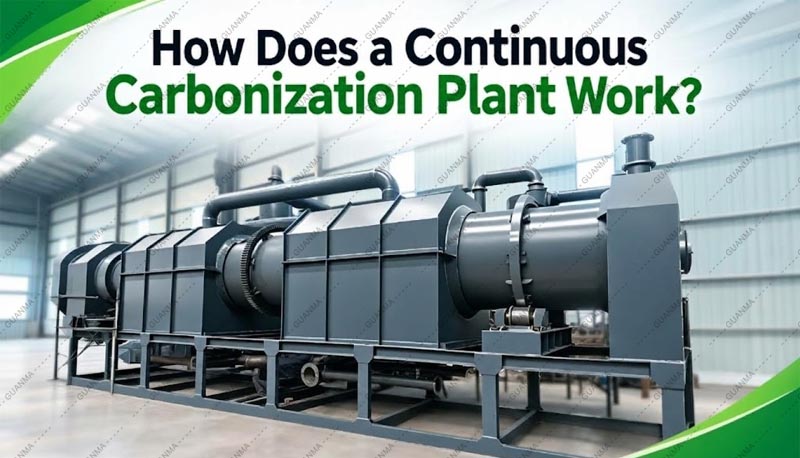
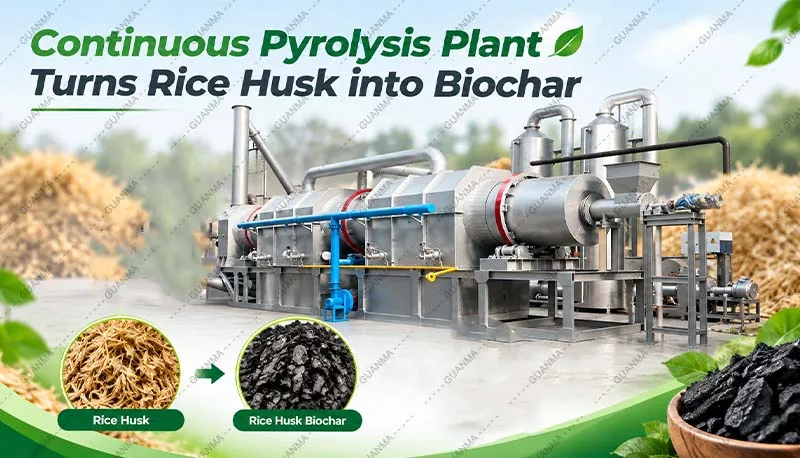
A continuous carbonization furnace is industrial equipment that continuously converts biomass into charcoal or biochar under controlled high-temperature and low-oxygen conditions.
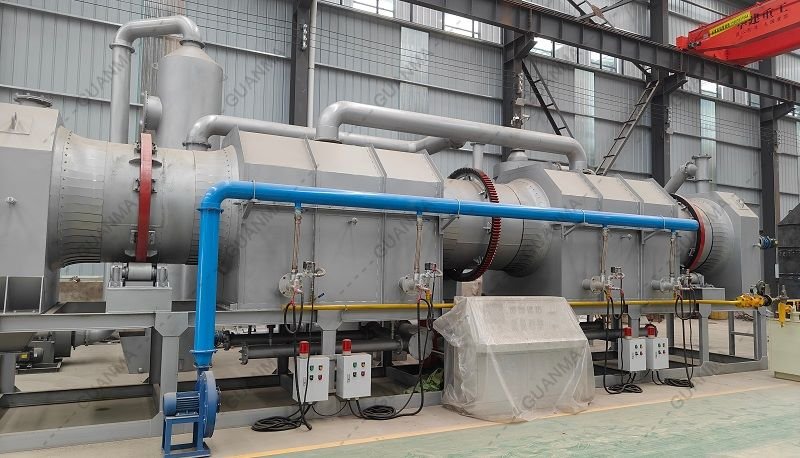
Unlike batch carbonization furnaces, continuous carbonization equipment allow raw materials to enter and carbonized materials to leave continuously.
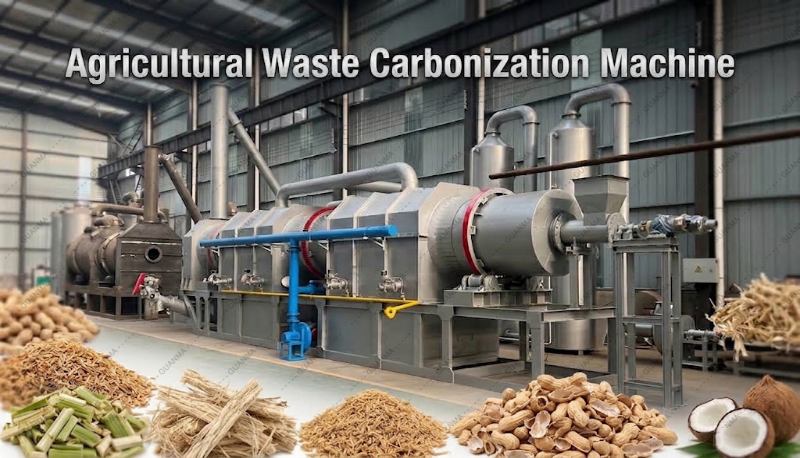
A complete continuous carbonization system may include a feeding system, dryer, carbonization furnace, combustible gas recycling system, cooling system, gas purification system, and automatic control system.
Continuous Carbonization Furnace Price
The cost varies according to the furnace capacity and configuration.
Industrial systems generally require an investment of tens of thousands of US dollars or more, especially when equipped with advanced automation, gas recycling, and environmental systems. Lower-capacity systems may use semi-automatic feeding and basic supporting equipment. Large industrial systems usually require automatic feeding, continuous cooling, combustible gas recycling, and advanced emission-control systems.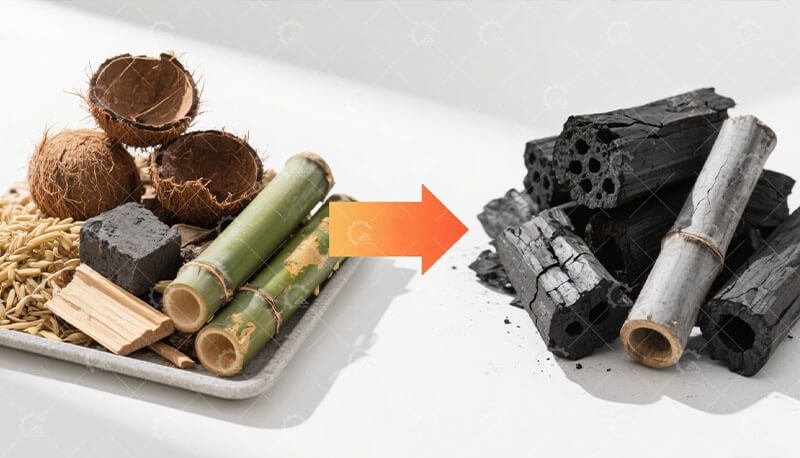
The exact carbonization furnace price should be determined according to the complete system configuration rather than capacity alone.
What Affects Continuous Carbonization Furnace Cost?
1. Production Capacity
Higher-capacity systems require larger furnaces, feeding systems, cooling units, and gas treatment equipment. Therefore, select the capacity based on your target daily output and working hours, rather than simply choosing the largest model.
2. Raw Material
Different biomass materials have different moisture content, particle sizes, densities, and carbonization characteristics.
3. Moisture Content
High-moisture biomass requires more energy for carbonization. A dryer may be installed before the furnace to reduce moisture and improve carbonization efficiency.
4. Automation Level
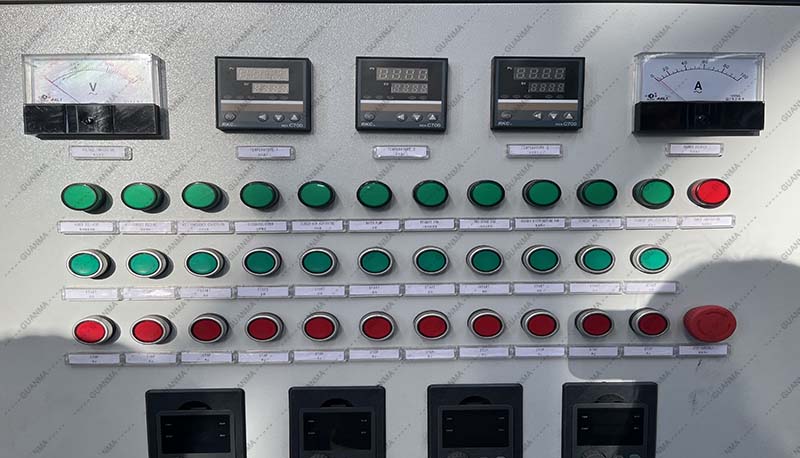
Automatic feeding, temperature control, material discharge, and PLC systems increase the initial investment. However, they can reduce manual labor and provide more stable operation.
5. Conbustible Gas Recycling
Carbonization generates combustible gases that can be recycled as heating fuel. This can reduce the need for external fuel and improve overall energy utilization.
6. Environmental Protection
Although environmental systems increase the initial investment, they help improve emission control and meet local environmental requirements.
Key Benefits of a Continuous Carbonization Machine
A continuous carbonization furnace offers several advantages for industrial production:
- Continuous feeding and discharge
- Higher production efficiency
- Lower manual labor requirements
- Better temperature control
- Recyclable combustible gas
- Stable charcoal quality
- Suitable for various biomass materials
- Integration with drying and cooling systems

These advantages can help reduce the long-term production cost per ton of charcoal.
Is a Continuous Carbonization Kiln Worth the Investment?
A continuous system usually requires a higher initial investment than a batch furnace. However, its continuous operation, lower labor requirements, gas recycling, and stable production can improve long-term operating efficiency.
When evaluating the investment, consider: Equipment Cost + Energy Cost + Labor Cost + Raw Material Cost + Maintenance Cost
Then compare these costs with: Charcoal Output × Selling Price
This provides a more realistic basis for evaluating project profitability.
Continuous Carbonization Pyrolysis Plant for Sale
Guanma Machinery provides customized continuous carbonization solutions for charcoal and biochar production. The complete system can be configured according to your raw material, moisture content, production capacity, working hours, and final product requirements.
Contact us with your raw material and target capacity to get a suitable continuous carbonization furnace configuration and quotation.
📩 Get Your Free Quote Today
Contact us today to discuss your project, capacity requirements, and target materials. Our team will reply within 24 hours with a customized proposal. You can also reach us directly at guanmarecycle@gmail.com — we are here to help!