The aluminum capacitor carbonization pyrolysis process offers a mature, efficient and eco-friendly solution for recycling waste aluminum capacitors.
Process Principle
Waste aluminum electrolytic capacitors contain aluminum shells, aluminum foils, electrolytic paper, plastic sleeves, rubber seals, organic electrolyte and resin binders.
Oxygen-limited pyrolysis carbonization at 400–600 °C decomposes and carbonizes all organic substances into carbon powder, pyrolysis oil and gas. Aluminum keeps solid state with low oxidation and no melting, achieving efficient separation between aluminum and organics.
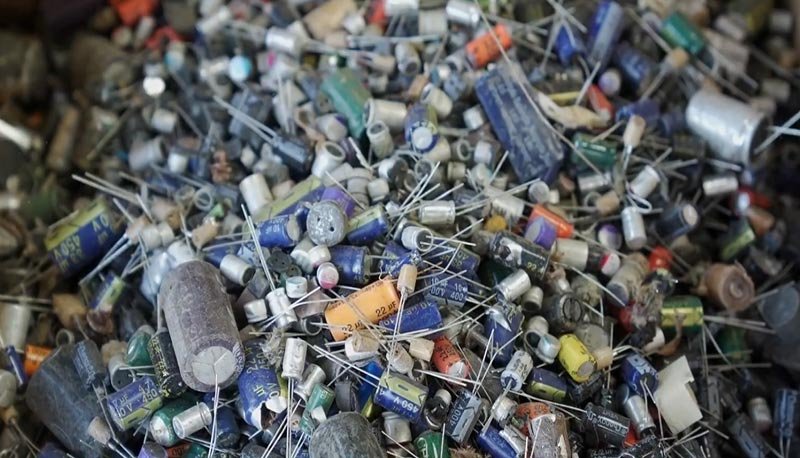
Aluminum Capacitor Carbonization Pyrolysis Process
1.Pretreatment
Capacitor discharging → dismantling and impurity removal → coarse crushing.
2.Pyrolysis
Oxygen-limited or anaerobic pyrolysis at 400–600 °C. Organic matters are cracked into carbon powder, oil and gas, while aluminum remains solid.
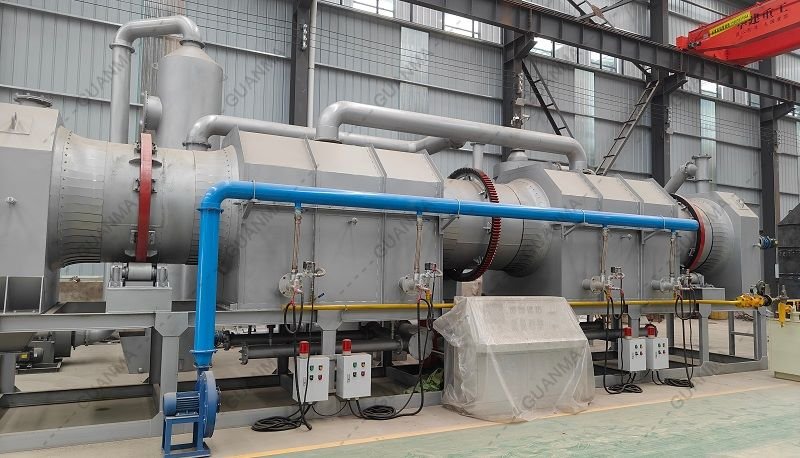
3.Three-phase Separation
Combustible gas is recycled for furnace heating; oil and gas are recovered by condensation; solid mixture of aluminum and carbon residue is discharged.
4.Sorting and Purification
Fine crushing → magnetic separation for iron removal → screening and air classification to separate aluminum from carbon powder.
5.Smelting and Ingot Casting
The aluminum material is high-temperature smelted and purified, then cast into recycled aluminum ingots.
The carbonization pyrolysis process is an advanced and practical technology suitable for industrial application, which can create good economic and social value for the harmless disposal and recycling of waste aluminum capacitors.
If you want to know more information, please feel free to contact Guanma Machinery.
📩 Get Your Free Quote Today
Contact us today to discuss your project, capacity requirements, and target materials. Our team will reply within 24 hours with a customized proposal. You can also reach us directly at guanmarecycle@gmail.com — we are here to help!