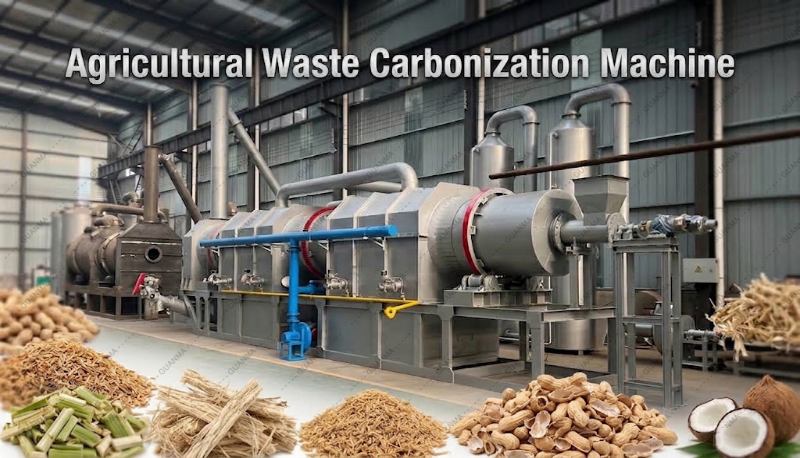
If you are looking for a rice husk pyrolysis equipment for biochar production, Convert rice husk waste into premium biochar with our continuous carbonization plant.
Continuous vs. Batch: Which Rice Husk Charcoal Making Equipment Suits You?
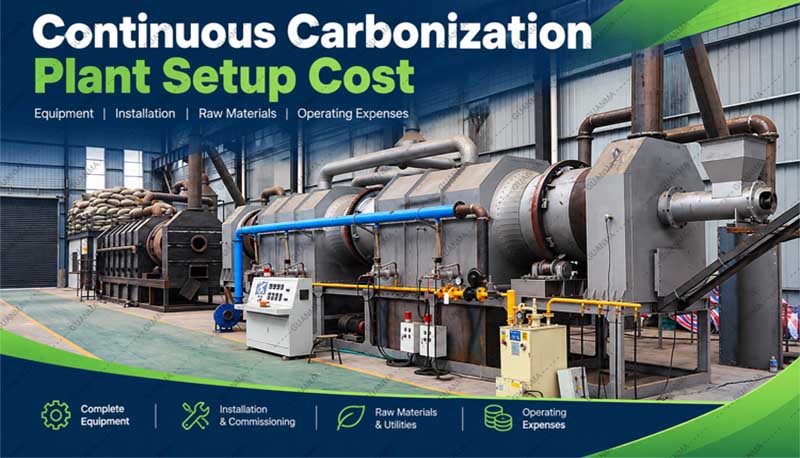
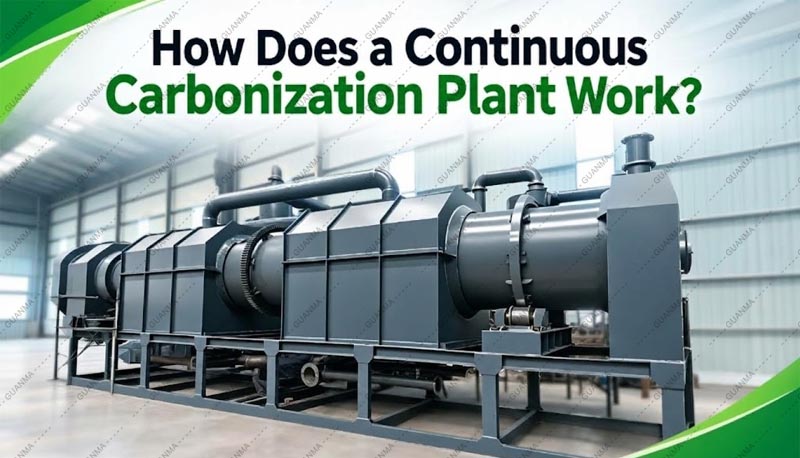
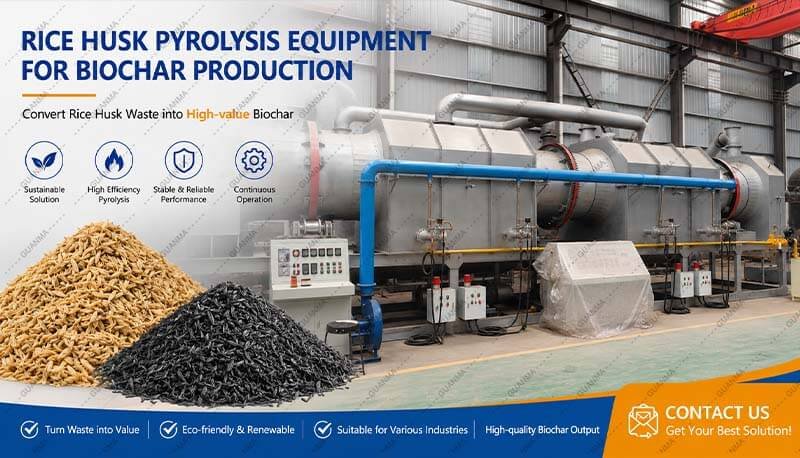
Continuous Pyrolysis Plant
Designed for 20–100+ tons per day throughput. This type offers consistent biochar quality, high thermal efficiency, and very low labor cost. It is ideal for large rice mills, or carbon credit projects requiring stable output.
Batch Carbonization Furnace
Suitable for smaller operations handling 1–10 tons per day. The initial investment is lower, but labor and turnaround time are higher. Many clients start with a batch rice husk charcoal furnace and later upgrade to a continuous line once their market grows.
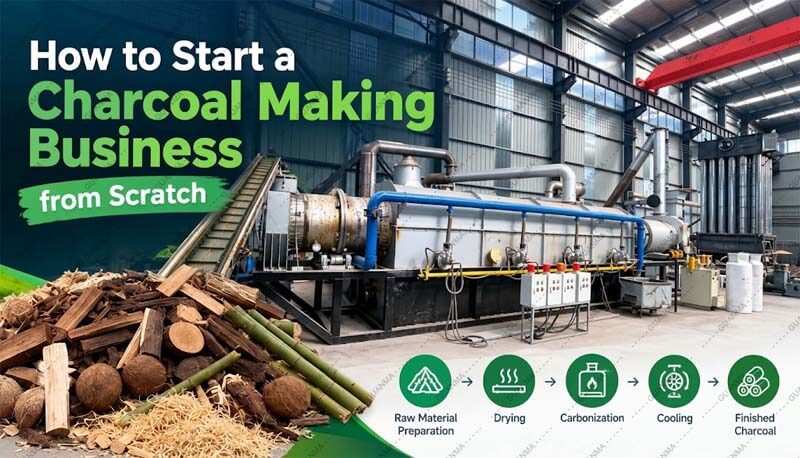
Biochar Carbonization Process
Understanding the rice husk pyrolysis equipment carbonization process helps you operate the equipment correctly and maximize biochar yield:
Pre-treatment
If rice husk moisture exceeds 15–20%, a dryer brings it down to the optimal range. This step prevents excessive steam inside the reactor and improves heat transfer.

Feeding
An airtight screw feeder transfers husk into the pyrolysis reactor. The sealed system prevents oxygen ingress, which would cause combustion instead of pyrolysis.
Pyrolysis Reaction
In the oxygen-starved reactor, organic components decompose into solid biochar, syngas, and liquid by-products. Temperature and residence time are precisely controlled to adjust biochar properties such as fixed carbon content (typically 40–60%) and surface area.
Syngas Utilization
The combustible syngas is cleaned and either fed into a gas burner to heat the reactor or sent to a generator for electricity production. A well-designed system reuses over 70% of the energy, making operating costs extremely low.
Biochar Cooling and Collection
The hot biochar passes through a water-cooled screw conveyor, reducing its temperature to safe handling levels before bagging or pelletizing.

Emission Control
Exhaust gas passes through a multi-stage scrubbing system to remove dust, tar mist, and acid gases, ensuring compliance with EU or local regulations.
Rice Husk Biochar: Value Beyond Soil
When you invest in a rice husk biochar production line, your income streams multiply. Biochar from rice husk has unique properties:
High silica content: Boosts plant resistance to pests and diseases.
Lightweight, porous structure: Enhances soil aeration and water-holding capacity.
Carbon sequestration: Stable carbon content qualifies for carbon credits in voluntary markets.
Industrial Use: Rice husk biochar with high silicon can be upgraded to precipitated silica for tire, rubber, or concrete additives.
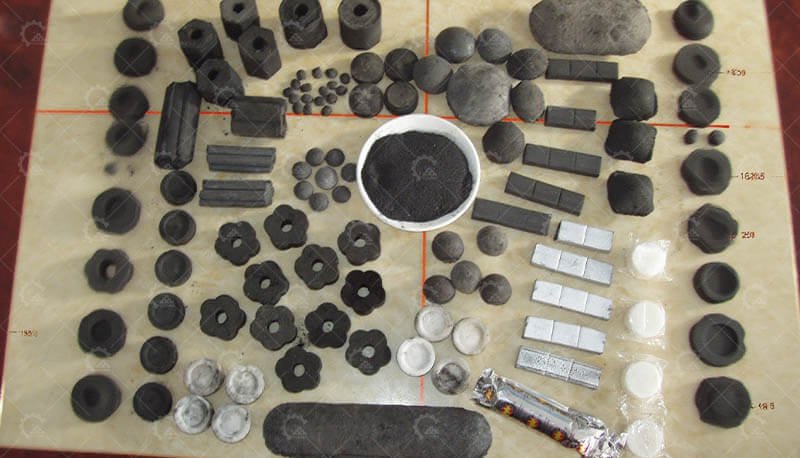
Fuel briquettes: If biochar markets are still developing in your region, the char can be briquetted into smokeless fuel for domestic and industrial heating.
Features That Make Rice Husk Pyrolysis Equipment Stand Out
Anti-Abrasion Design
Rice husk is abrasive. Our reactors and conveyors use wear-resistant alloys and easily replaceable liners, extending lifespan significantly.
Smart Control System
PLC-based automation with real-time monitoring of temperature, pressure, and syngas composition. Remote diagnostics allow our engineers to support your team from anywhere.
Energy Self-Sufficiency
Once started, the plant runs on its own pyrolysis gas. Only the initial preheating requires external fuel (biomass pellets, diesel, or natural gas).
Modular Construction
Skid-mounted units speed up installation and allow capacity expansion by adding modules.
Take the Next Step Towards a Cleaner, More Profitable Operation
If you are ready to transform agricultural waste into a valuable resource, Contact guanma machinery with details about your daily husk volume and target end products. We will provide a customized proposal, including 3D layout drawings, energy balance analysis, and a detailed business case.
📩 Get Your Free Quote Today
Contact us today to discuss your project, capacity requirements, and target materials. Our team will reply within 24 hours with a customized proposal. You can also reach us directly at guanmarecycle@gmail.com — we are here to help!