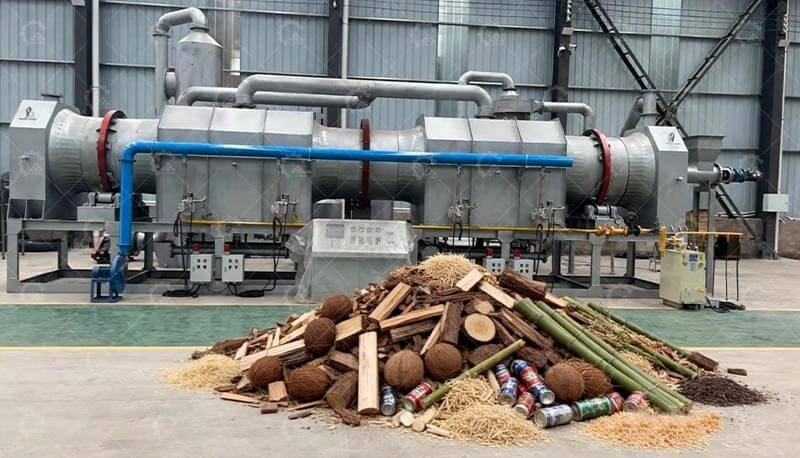
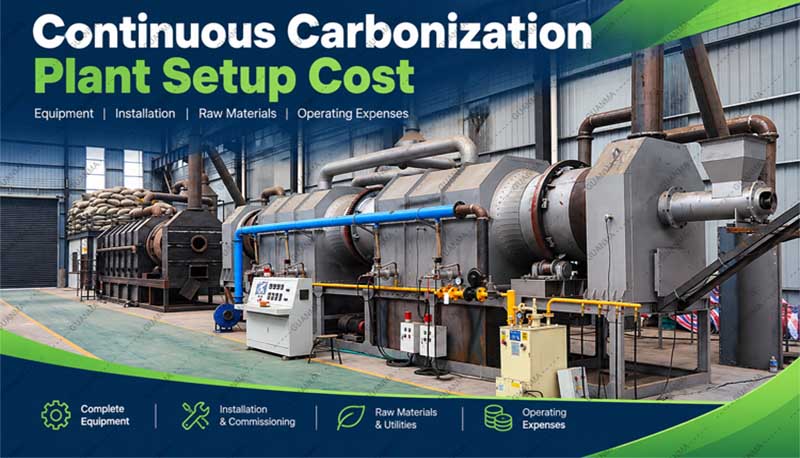
Internal and external heating carbonization furnaces use different heating methods. Understanding their differences helps you select suitable equipment for your biomass carbonization business.
1. Internal vs. External Heating: Key Differences
An internal heating carbonization furnace uses hot gas that directly contacts the materials. This method provides fast heat transfer and supports large-scale production. However, raw material size, moisture, and ash content require proper control.
An external heating carbonization furnace transfers heat through the furnace wall. The heating gas does not directly contact the materials, keeping the combustion and carbonization processes separate.

Both types have their own applications, depending on production requirements and material characteristics.
2. Advantages of an External Heating Carbonization Furnace
An external heating carbonization machine is suitable for biomass projects that require indirect heating and controlled carbonization conditions.
Its main advantages include:
- Indirect heating: Combustion gas does not directly mix with the biomass.
- PLC control: Enables automatic temperature monitoring and adjustment for different raw materials.
- Automatic Feeding and Discharging: Supports continuous material processing and reduces manual operation.
- Combustible Gas recovery: Combustible gases generated during carbonization can be collected and reused as supplementary fuel.
- Continuous production: Automatic feeding and discharging systems support industrial operation.
- Flexible applications: Suitable for coconut shells, rice husks, sawdust, wood chips, and other biomass materials.
- Exhaust Gas Treatment: Helps control emissions during carbonization.
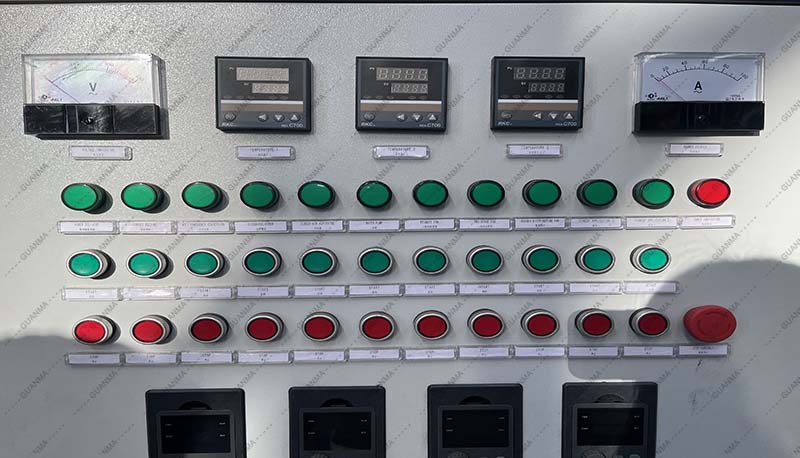
For better carbonization results, raw materials should have suitable particle sizes and moisture content. Oversized materials may require crushing, while high-moisture biomass may need pre-drying.
3. How to Choose the Right Carbonization Furnace?
Before purchasing the carbonization equipment, consider three important factors:
1. Raw Materials
Check the material type, particle size, moisture content, and ash content. Different biomass materials require different processing conditions.
2. Production Capacity
Determine your daily processing capacity and target charcoal output. Choose equipment that matches your production requirements.
3. Operating Costs
Compare fuel consumption, heat recovery, maintenance, and labor costs. A suitable gas recovery system can help reduce additional fuel consumption.
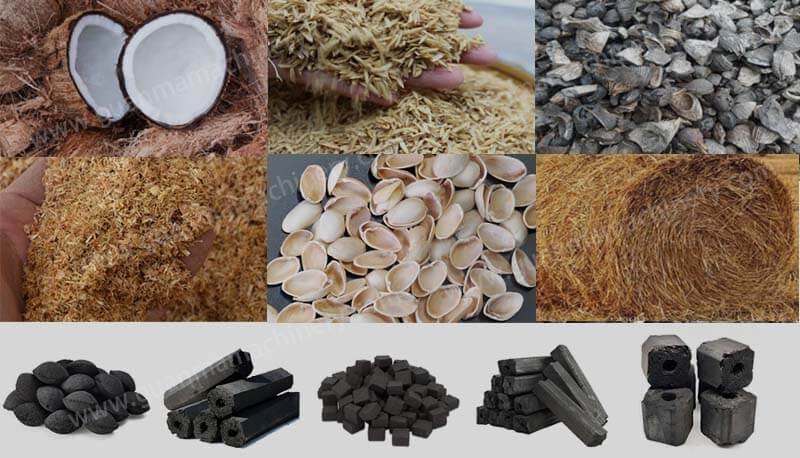
4. Guanma Machinery External Heating Carbonization Furnace
As a professional carbonization furnace manufacturer, Guanma Machinery provides external heating carbonization equipment and customized biomass processing solutions.
Our carbonization production lines can be configured with:
- External heating system for indirect heat transfer.
- Automatic feeding and discharging systems.
- Combustible gas recovery and reuse.
- Dust collection and exhaust gas treatment.
- Customized configurations for different raw materials and capacities.
We help customers select suitable equipment based on their raw materials, production targets, and charcoal requirements.
Looking for an external heating carbonization furnace manufacturer?
Contact Guanma Machinery today! Send us your raw material type, moisture content, required capacity, and target charcoal product to get a customized equipment solution and quotation.
📩 Get Your Free Quote Today
Contact us today to discuss your project, capacity requirements, and target materials. Our team will reply within 24 hours with a customized proposal. You can also reach us directly at guanmarecycle@gmail.com — we are here to help!