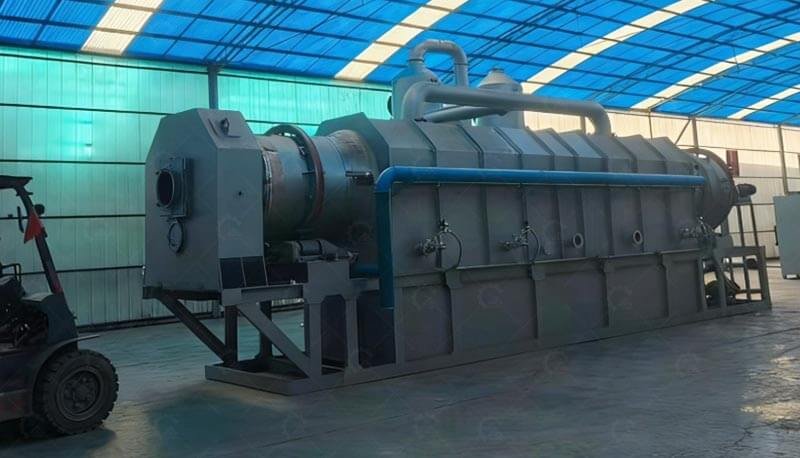
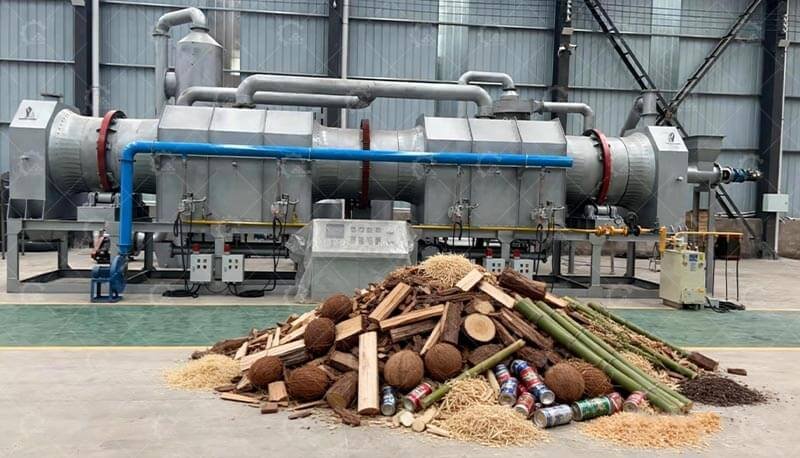
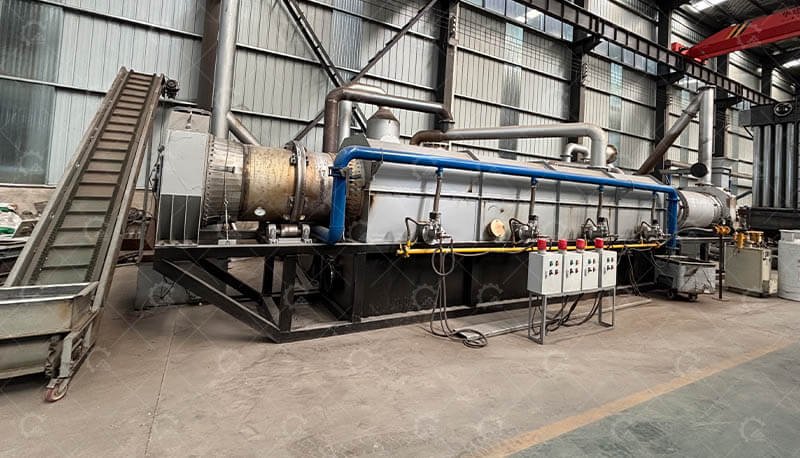
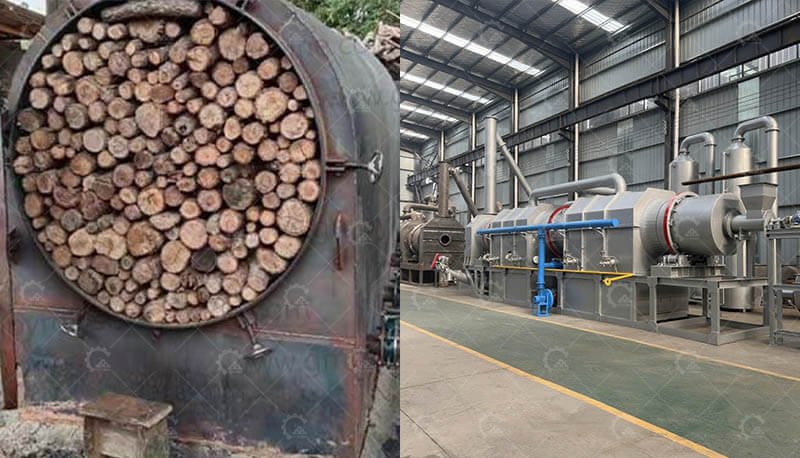
In the search for sustainable agricultural and waste management solutions, the Cow Dung Carbonization Pyrolysis Process has emerged as a groundbreaking technology. This innovative method not only addresses the environmental challenges associated with livestock waste but also converts it into high-value products.
What is the Cow Dung Carbonization Pyrolysis Process?
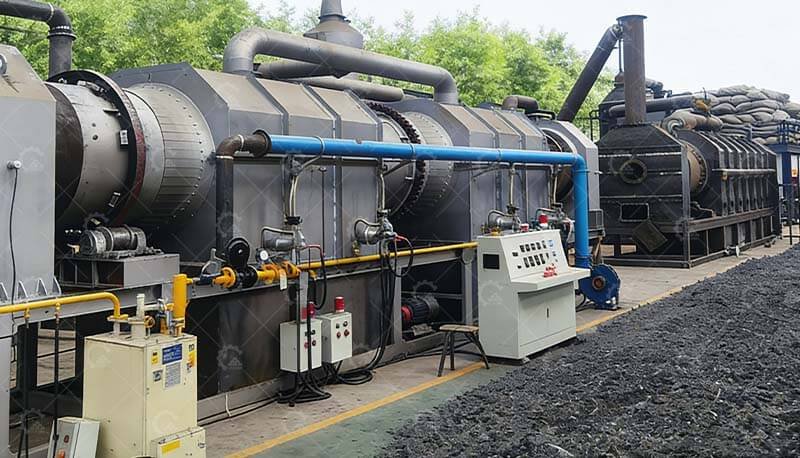
The Cow Dung Carbonization Pyrolysis Process is a thermochemical conversion carried out in an oxygen-limited environment. Through controlled high temperatures, raw cow dung is decomposed into stable carbon-rich material known as biochar, along with other by-products like syngas and bio-oil.
How Does the Cow Dung Carbonization Work?
A well-designed pyrolysis system ensures optimal results. Here’s a step-by-step breakdown:
Pre-processing
Fresh cow dung is first dried to reduce moisture content, often using waste heat from the pyrolysis reactor itself, enhancing energy efficiency.
Feeding & Heating
The dried dung is fed into a sealed carbonization furnace. The temperature is gradually raised to between 400°C and 700°C in an oxygen-deficient atmosphere.
Thermal Decomposition
At this stage, volatile components are driven off. The material undergoes chemical breakdown without combustion.
Carbonization & Gas Recovery
The solid residue left is fine biochar. The released gases, primarily syngas, are often recycled to fuel the furnace, creating a self-sustaining system.
Cooling & Collection
The produced biochar is cooled and collected for packaging. Condensable gases are liquefied to harvest bio-oil and wood vinegar.
End Products and Their Versatile Applications
This process is valuable because it creates multiple revenue streams:
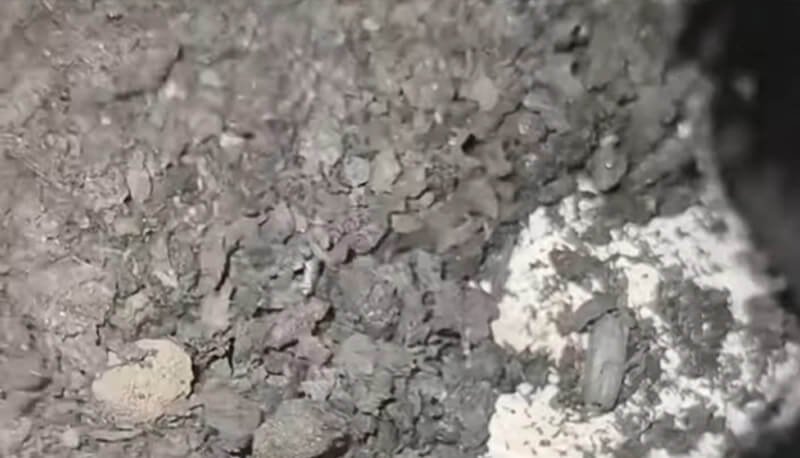
Biochar: A highly porous carbon product used as a superior soil amendment to improve fertility, retain moisture, and sequester carbon.
Wood Vinegar: A liquid by-product utilized as a natural pesticide, organic fertilizer additive, or in animal feed.
Bio-oil/Tar: Can be refined or used as a fuel source.
Syngas: A combustible gas used to generate heat or power the pyrolysis system, reducing external energy needs.
Key Advantages of Modern Cow Dung Pyrolysis Systems
Waste Elimination
Dramatically reduces dung volume by ~80-90%, solving storage and pollution issues.
Odor & Pathogen Control
High temperatures completely eliminate odors and harmful pathogens.
Carbon Negative Solution
Biochar sequesters carbon in soil for centuries, contributing to climate goals.
Economic Returns
Transforms a disposal problem into marketable products (biochar, energy).
Energy Efficiency
Modern systems are designed for closed-loop energy recovery, minimizing operational costs.
The Cow Dung Carbonization Pyrolysis Process represents more than just waste treatment—it’s a strategic shift towards a circular economy.
Contact guanma machinery today for a free consultation and detailed project proposal. Let us help you turn waste into lasting wealth.
Frequently Asked Questions (FAQ)
What is the typical capacity range for an industrial cow dung carbonization plant?
Our systems range from small-scale (500 kg/day) to large industrial units (20+ tons/day), customizable to your farm or business size.
Is the process environmentally friendly?
It prevents methane emissions from traditional decomposition, reduces air pollution compared to open burning, and produces stable carbon sinks.
What is the main use of the final biochar product?
Primarily used in agriculture for soil enhancement. It also has applications in water filtration, livestock bedding, and as a raw material in various industries.